6th March, 2026
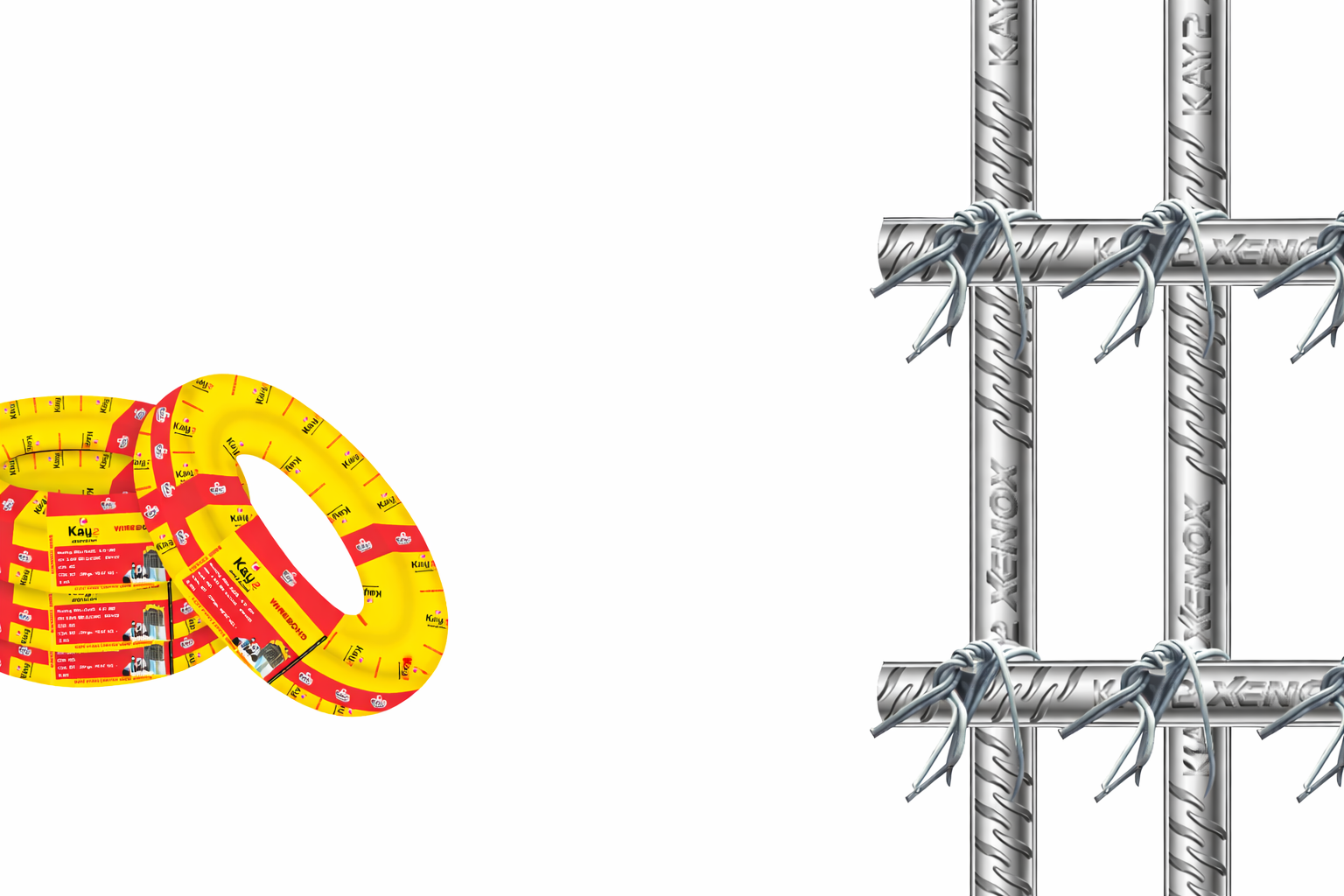
When people think about construction materials, the focus usually stays on cement, steel, and concrete. But anyone involved in actual site work knows that smaller materials also play an important role in keeping the job accurate, efficient, and reliable. Binding wire is one of those essentials. It may look simple, but it is widely used to hold reinforcement bars in place before concreting, helping the steel framework remain stable during handling and pouring.
In this blog, you will find the key details related to binding wire in construction-what it is, why it matters, where it is used, and what should be checked before choosing the right product. You will also find the essential product information of KAY2 Wirebond, which is presented as a specification-based option designed for reinforcement tying work.
Binding wire is a thin, flexible steel wire used to tie reinforcement bars, stirrups, and steel intersections during reinforcement work. Its main purpose is to keep the rebar framework properly arranged until the concrete is poured and set.
In simple terms, binding wireused in construction helps maintain alignment and stability in the steel structure before concreting begins. While it does not act as the main structural element, it plays an important supporting role in ensuring the reinforcement stays in its intended position.
The main function of construction binding wire is to secure reinforcement bars so they do not shift during site work. When steel bars move out of place before concrete pouring, it can affect spacing, alignment, and the ease of execution.
That is why binding wire in construction is commonly used for:
It is a small component, but it contributes to smoother and more controlled reinforcement work on site.
Not every binding wire performs the same way. A wire with uneven diameter, rough finish, poor flexibility, or a tendency to split during tying can make site work slower and less efficient. Even small issues in the wire can create repeated difficulty because it is used continuously across different stages of reinforcement work.
A reliable construction binding wire should offer:
These factors make a noticeable difference in labour efficiency, ease of use, and overall site convenience.
Before selecting any binding wire used in construction, it is important to evaluate the product from a practical point of view.
Start by checking whether the diameter is uniform. If the thickness is inconsistent, the tying result may also become inconsistent. Next, look at the finish. A clean and smooth surface is easier to handle, while rough or defective edges can make tying less comfortable and less efficient. The wire should also twist properly without frequent breakage or splitting.
It is also useful to check:
These points are important regardless of the project size, because the right wire helps reduce waste and supports smoother work every day.
A product positioned for reinforcement tying work should not only sound good in marketing language-it should also offer defined specifications and practical usability.
The listed details for KAY2 Wirebond include:
These specifications provide a clear reference for buyers, contractors, and site teams who need predictable size and packing options for regular construction use.
The listed tensile strength values are:
These values help define the stated performance range of the wire and provide an additional technical reference for evaluation.
The listed chemical composition is as follows:
This information adds technical clarity and supports a more specification-oriented understanding of the product.
The real value of any binding wire in construction is seen during actual use. Site teams do not judge it only by appearance-they judge it by how it performs while tying bars repeatedly throughout the day.
A more practical and dependable wire is one that:
These are the details that affect work speed, convenience, and confidence during reinforcement work.
Even when buyers compare different types of binding wire in construction, the final decision often comes down to these practical points rather than just the product label.
For construction professionals, the right wire is the one that supports the job without creating unnecessary difficulty. It should be easy to handle, consistent in form, and reliable in regular site conditions.
Based on its listed specifications and stated performance characteristics, KAY2 Wirebond is positioned as a product developed for practical reinforcement tying needs. With defined diameter options, standard packing sizes, and specification-based details, it fits the requirements of users looking for a dependable binding wire used in construction.
The role of binding wire may appear small, but its contribution to reinforcement work is significant. It helps keep steel bars aligned, supports stability before concreting, and makes daily site execution more manageable. That is why choosing the right construction binding wire should be based on quality, consistency, and practical performance.
A good binding wire in construction should be easy to twist, comfortable to handle, consistent in size, and dependable during repetitive use. When these basics are right, reinforcement work becomes smoother, faster, and more reliable.
For contractors, engineers, dealers, and builders looking for a professionally specified binding wire used in construction, a product with clear technical details, defined packing, and site-focused usability naturally becomes the better choice.
Binding wire is a thin and flexible steel wire used to tie reinforcement bars, stirrups, and other steel intersections during reinforcement work. Its main role is to keep the rebar framework in place before concrete is poured, so the structure stays properly aligned during handling and concreting.
Binding wire may look like a small material, but it plays a very important supporting role on site. It helps hold reinforcement bars in their intended position, reduces unnecessary movement before pouring, and makes reinforcement work more stable, accurate, and manageable.
No, binding wire is not the main structural element of a building. It does not carry the structural load like steel bars or concrete. Its purpose is to support the reinforcement setup by keeping the bars properly tied and positioned until the concrete sets.
Binding wire is commonly used while tying TMT bars at intersections, securing reinforcement cages, holding stirrups in place, and maintaining spacing in slab, beam, column, and footing work. It is mainly used wherever steel reinforcement needs to be held together before concreting.
A few practical things should always be checked: whether the wire has a uniform diameter, whether the surface is smooth, whether it bends and twists easily, whether it resists splitting during tying, and whether the packing is clearly defined. A wire that performs smoothly during repeated use is usually the better choice.
Poor-quality binding wire can slow down site work and create repeated problems during tying. If the wire has uneven thickness, a rough finish, or breaks too often, it becomes harder to handle and less efficient. Good quality wire supports smoother work, better grip, and less hassle during daily reinforcement activity.
Low-quality wire can cause frequent breakage, uncomfortable handling, inconsistent tying, and wasted time. Even though the binding wire is a small material, site teams use it repeatedly throughout the day, so even minor defects can affect labour efficiency and make reinforcement work more difficult than it needs to be.
A dependable binding wire is one that feels consistent throughout the coil, ties smoothly, bends without much trouble, has fewer visible surface defects, and holds reinforcement bars securely. In real site conditions, reliability is often judged by ease of handling and how consistently the wire performs during repeated use.
Yes, diameter matters because it affects handling, flexibility, and tying consistency. If the wire thickness is not uniform, the tying result may also become uneven. A clearly specified and consistent diameter helps site teams work faster and with better control.
The best way to compare binding wire is not only by price or label, but by practical performance. Buyers should look at consistency, smooth finish, flexibility, resistance to splitting, secure grip with reinforcement bars, clear packing, and whether the product follows a recognized specification. In the long run, a wire that performs reliably on site is usually the better choice.
Team Kay2 XENOX - a trusted name in the steel and construction industry for several decades, backed by years of hands-on experience in TMT bars, steel products, building materials, and construction technology.
All information has been reviewed using brand specifications, engineering standards, and authenticated industry insights.